A Versatile Knife for Your Camp Kit
Nine camp jobs, from setting up to packing out.
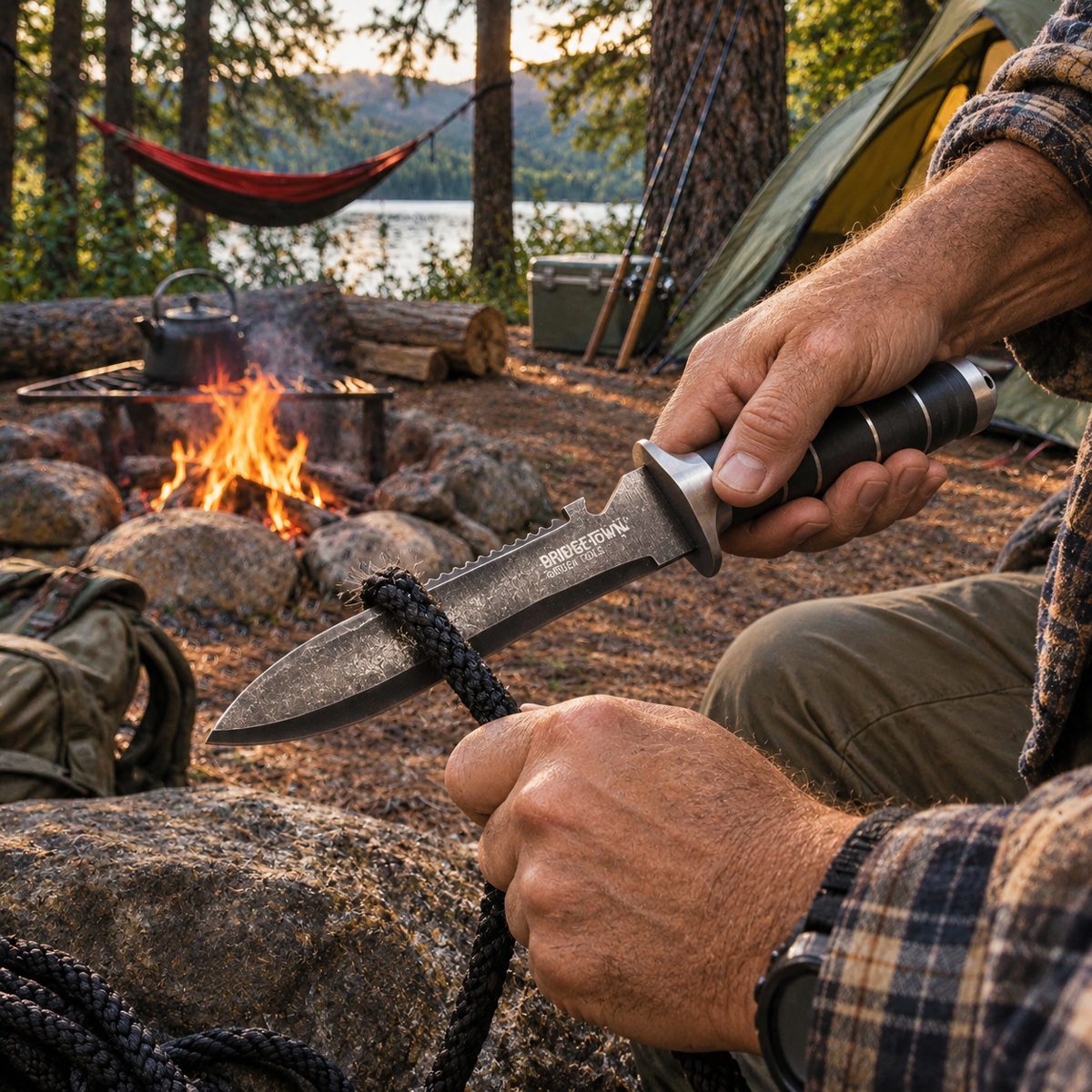
The best camp tools do more than one job. Here's how a hori hori earns a spot in your kit, from setting up camp to packing out.
Setting up camp
- Clearing a tent site. Pry up rocks and saw through surface roots before you pitch.
- Setting stakes. Use the handle's butt to tap stakes into hard ground. Use the blade to start a pilot hole in rocky soil.
- Trenching. Cut a shallow channel to steer rainwater away from your tent. Only do this where it's allowed; many sites ask you not to.
Around the fire and kitchen
- Fire prep. Clear a ring down to mineral soil and trim small, dead branches with the serrated edge.
- Food prep. Slice vegetables, cut cheese and open packaging with the fine edge.
- Cordage. Saw through paracord, rope and fishing line cleanly.
Leave No Trace
- Cat holes. Dig 6–8 inches deep, using the blade's depth markings to check. This is the job that makes a hori hori better than a regular knife.
- Putting the site back. Refill holes and scatter disturbed soil before you leave.
Beyond the campsite
- Foraging and fishing. Dig worms or wild roots, cut line, and clean up at the water's edge.
Better tools for these jobs
| Job | Use instead |
|---|---|
| Splitting firewood | A hatchet or small axe |
| Carving feather sticks or utensils | A bushcraft or carving knife |
| Cutting branches over 1" thick | A folding saw |
Gear-list tip: If your kit has a trowel, a utility knife and a stake mallet, this one tool can replace all three for most trips.